Vitamin C is one of the most studied nutrients for its immune function. Decades of research, from Cochrane reviews to EFSA opinions, have systematically documented its role in supporting the body's natural defenses.
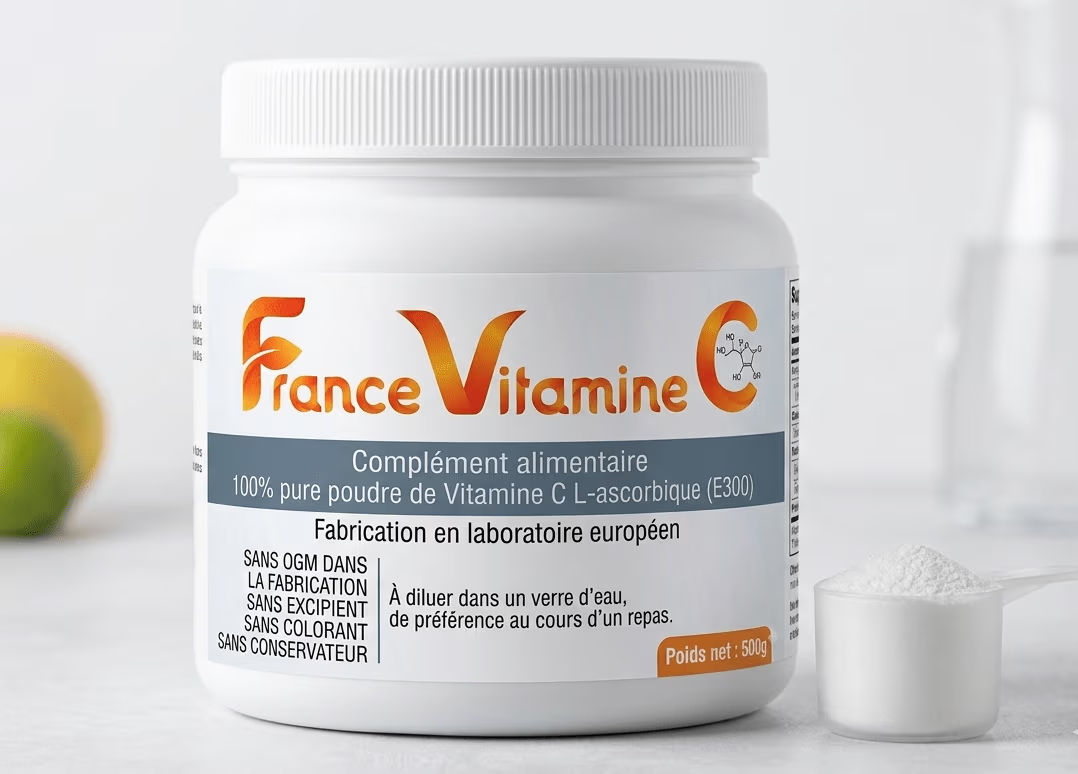
If high daily intakes irritate your stomach, the buffered form — calcium ascorbate — is better tolerated.
How does vitamin C support the immune system?
On several levels at once: it supports white blood cell production, phagocyte function, the skin barrier and interferon production, and it protects immune cells from oxidative stress in inflamed tissue.
Vitamin C acts on multiple levels of the immune system:
- Stimulates white blood cell production (neutrophils, lymphocytes)
- Enhances phagocyte function — cells that engulf and destroy pathogens
- Supports the skin barrier — the first line of defense against infection
- Antioxidant protection for immune cells in inflammatory environments
- Promotes interferon production — antiviral immune signaling proteins
What did the Cochrane review on colds find?
Across 29 trials and 11,306 participants (2013), regular supplementation shortened colds by 8% in adults and 14% in children, reduced severity in every supplemented group, and halved incidence under intense physical stress.
A landmark 2013 Cochrane review analyzed 29 trials involving 11,306 participants:
- Regular supplementation reduces cold duration by 8% in adults and 14% in children
- In people under intense physical stress (marathoners, soldiers in sub-arctic conditions), vitamin C reduced cold incidence by 50%
- Cold severity was reduced in all supplemented groups
Which vitamin C claims are authorised by EFSA?
Five: normal immune system function, reduction of tiredness and fatigue, normal collagen formation, protection of cells from oxidative stress, and increased iron absorption. These wordings are legally approved.
The European Food Safety Authority (EFSA) has authorized the following health claims for vitamin C:
- ✅ Contributes to the normal function of the immune system
- ✅ Contributes to the reduction of tiredness and fatigue
- ✅ Contributes to normal collagen formation
- ✅ Contributes to the protection of cells from oxidative stress
- ✅ Increases iron absorption
💡 Important note: These are scientifically validated and legally approved claims — unlike many supplements whose marketing claims are not backed by clinical evidence.
What did COVID-19 trials on IV vitamin C show?
Mixed results: lower inflammatory markers (IL-6, CRP), some improvement in oxygenation in severe cases and shorter ICU stays in certain trials, but no significant survival benefit in large randomised trials.
Several clinical trials investigated high-dose IV vitamin C for COVID-19 patients. Results showed:
- Reduction in inflammatory markers (IL-6, CRP)
- Some improvement in oxygenation in severe cases
- Reduced ICU stay duration in some trials
- No significant survival benefit in large RCTs
What daily dose supports immune function?
200 to 500 mg/day for maintenance, 1 to 2 g/day in divided doses during illness, and 500 mg to 1 g before exercise under high physical stress. Intensive IV protocols belong under medical supervision only.
| Purpose | Recommended dose | Form |
|---|---|---|
| Daily maintenance | 200–500 mg/day | Oral (powder or capsules) |
| During illness | 1–2 g/day | Divided doses |
| High physical stress | 500 mg–1 g before exercise | Oral |
| Intensive therapy | 10–100 g/day | IV only (medical supervision) |
Is vitamin C worth taking for immunity?
Its role in immune support is fundamental and well documented, though it is no miracle cure. Covering your daily intake through diet, supplementation or both is one of the most cost-effective habits available.
The evidence is clear: vitamin C plays a fundamental and well-documented role in immune support. While it is not a miracle cure, ensuring adequate daily intake — through diet, supplementation, or both — is one of the most cost-effective strategies for maintaining good health.
FAQ
Sources: EFSA (2012). Scientific Opinion on the tolerable upper intake level of vitamin C. | Hemilä H., Chalker E. (2013). Cochrane Database Syst Rev. | Carr AC, Maggini S. (2017). Nutrients. | Fowler AA et al. (2019). CHEST. | ANSES (2021).