
Two ways of delivering the same molecule
Concentration · Absorption · Cofactors · Real cost
The short answer: pure L-ascorbic acid and acerola deliver exactly the same vitamin C molecule. What separates them is not the nature of the vitamin but its concentration, the fruit compounds that come with it, and the real price of a gram of vitamin C — which varies by a factor of ten.
This comparison is not trying to crown a winner. The two products answer different needs, and plenty of our customers use both. Here are the numbers so you can decide for yourself.
What Is the Real Difference Between Ascorbic Acid and Acerola?
The difference is not the molecule, it is what surrounds it. In both cases, the vitamin C is L-ascorbic acid, formula C₆H₈O₆. Acerola contains 17–25% of it, embedded in the fruit matrix; the pure powder contains more than 99.7%, and nothing else.
The body absorbs vitamin C through two transporters, SVCT1 and SVCT2. These transporters recognise the structure of the molecule — not its origin. An L-ascorbic acid molecule from a Brazilian acerola cherry and one obtained by fermentation are, as far as the transporter is concerned, strictly indistinguishable.
| Pure L-ascorbic acid | Organic acerola | |
|---|---|---|
| Molecule | L-ascorbic acid | L-ascorbic acid |
| Vitamin C content | ≥ 99.7% | 17–25% |
| Other compounds | None | Bioflavonoids, anthocyanins, provitamin A |
| Taste | Distinctly sour | Tart, fruity |
| Origin | Fermentation, Europe | Dried fruit, Brazil |
Which One Is Better Absorbed?
Neither, to any measurable degree. Studies comparing vitamin C from food with synthetic vitamin C in humans have found no significant difference in bioavailability.
The review by Carr and Vissers (2013, Nutrients) pulled together every available trial: whether it comes from citrus juice, a fruit extract or a synthetic tablet, vitamin C reaches the plasma in the same proportions. Mangels and colleagues (1993, Journal of Nutrition) had reached the same conclusion ten years earlier.
What genuinely limits absorption is not the source but the dose. The work of Levine (1996, PNAS) shows that absorption approaches 100% below 200 mg per serving, then falls off progressively above that. Splitting your intake changes far more than choosing between natural and synthetic.
How Much Vitamin C Is There in a Gram of Each?
A gram of pure powder delivers around 997 mg of vitamin C; a gram of acerola delivers 170–250 mg. That is a ratio of four to six to reach the same dose.
In practice, for an intake of 500 mg of vitamin C:
| Product | Amount needed | Practical measure |
|---|---|---|
| Pure L-ascorbic acid | ≈ 0.5 g | one 1 ml scoop |
| Acerola at 25% | ≈ 2 g | four 1 ml scoops |
| Acerola at 17% | ≈ 2.9 g | nearly six 1 ml scoops |
That is why we sell acerola in 100 g to 500 g sizes and the pure powder up to a kilo: for the same use, you go through far more acerola.
Do Acerola's Cofactors Really Bring Anything?
Yes, but not what they are usually credited with. The bioflavonoids in acerola do not make vitamin C better absorbed — that has not been established in humans. What they do have is their own antioxidant activity, independent of vitamin C.
The trial by Vinson and Bose (1988, American Journal of Clinical Nutrition) is regularly cited to claim that flavonoids improve absorption. Its results have not been convincingly reproduced since, and the Carr and Vissers review concludes that no benefit to bioavailability has been demonstrated.
So the honest argument for acerola is not "it absorbs better" but "it brings something extra": a set of fruit polyphenols that the isolated molecule does not provide. That is a dietary choice, not a dosing choice.
Which Costs Less per Gram of Vitamin C?
The pure powder costs roughly ten times less per gram of vitamin C. It is the widest gap between the two products, and the one most often overlooked.
| Product | Size | Price | Vitamin C contained | Cost per gram of vitamin C |
|---|---|---|---|---|
| Pure L-ascorbic acid | 1 kg | €69.00 | ≈ 997 g | ≈ €0.07 |
| Pure L-ascorbic acid | 250 g | €24.00 | ≈ 249 g | ≈ €0.10 |
| Organic acerola (25%) | 500 g | €69.00 | ≈ 125 g | ≈ €0.55 |
| Organic acerola (17%) | 500 g | €69.00 | ≈ 85 g | ≈ €0.81 |
There is nothing abnormal about that gap: growing a fruit, drying it and concentrating it costs structurally more than an industrial fermentation. You simply need to know it before comparing two labels on their shelf price.
Which One Is Better Tolerated by the Stomach?
Acerola, gram for gram of powder — but not gram for gram of vitamin C. The acidity comes from the vitamin C itself: at an identical amount of vitamin C, the difference in tolerance narrows sharply.
Pure L-ascorbic acid in solution drops to around pH 2.5. On a sensitive or empty stomach, that can cause burning. There are three fixes, in order of effectiveness:
- Take it with a meal and dilute it in a large glass: enough in most cases.
- Split the dose into two or three servings: better absorption and less acidity at once.
- Switch to calcium ascorbate, whose pH is close to neutral: this is the clearest answer to the acidity problem, with no loss of concentration.
So Which Should You Choose for Your Situation?
The deciding factor is use, not quality. Both products are pure and traceable; they simply do not serve the same intention.
| Your situation | Our recommendation |
|---|---|
| You want high doses at the best cost | Pure L-ascorbic acid |
| You prefer a whole-food source | Organic acerola |
| You have a sensitive stomach | Calcium ascorbate |
| You are after the highest natural concentration | Organic camu-camu |
| You want both approaches | Pure powder daily, acerola in courses |
One last useful point: the claim "contributes to the normal function of the immune system" is authorised by EFSA for vitamin C, whatever its source. A natural product does not earn claims that the pure form would not also be entitled to.
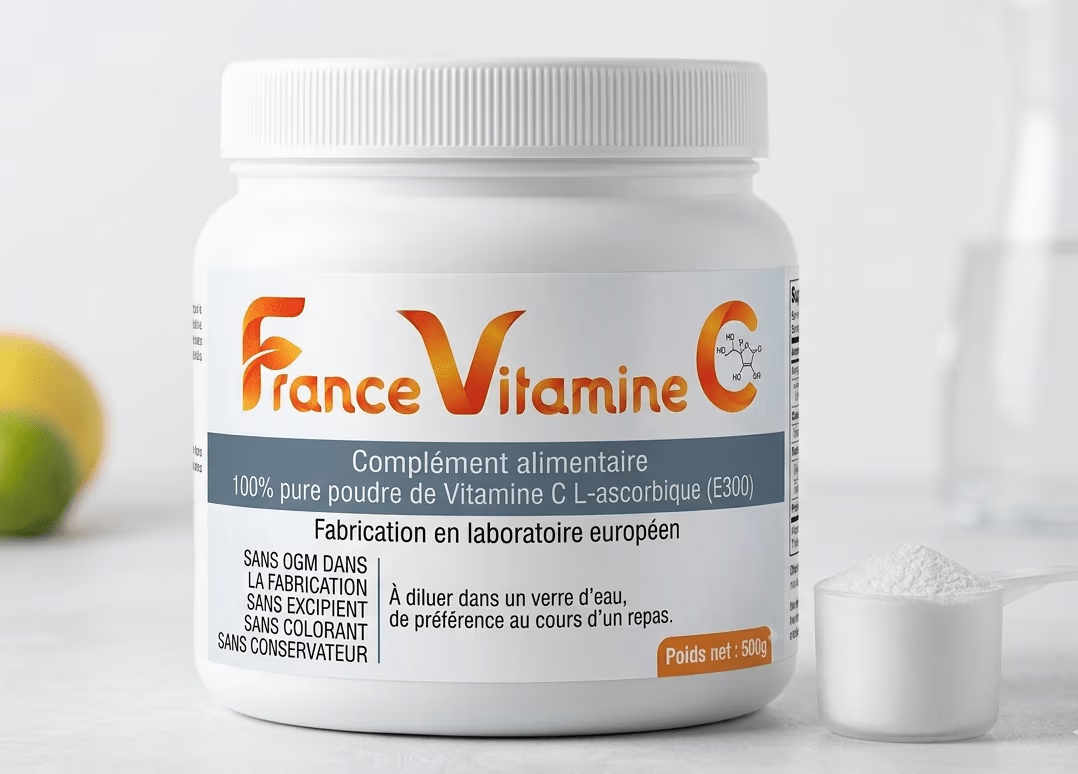
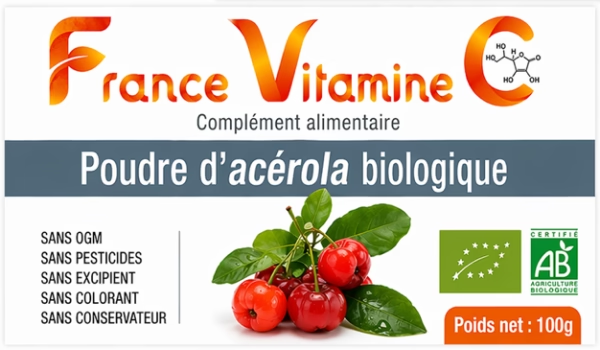
The two products compared, plus the gentle alternative
Pure powder for concentration, acerola for the whole fruit, calcium ascorbate for sensitive stomachs.
FAQ
Sources : Carr AC, Vissers MCM. (2013). Synthetic or food-derived vitamin C — are they equally bioavailable? Nutrients, 5(11):4284-4304. | Mangels AR, Block G, Frey CM, et al. (1993). The bioavailability to humans of ascorbic acid from oranges, orange juice and cooked broccoli is similar to that of synthetic ascorbic acid. J Nutr, 123(6):1054-1061. | Levine M, Conry-Cantilena C, Wang Y, et al. (1996). Vitamin C pharmacokinetics in healthy volunteers. PNAS, 93(8):3704-3709. | Vinson JA, Bose P. (1988). Comparative bioavailability to humans of ascorbic acid alone or in a citrus extract. Am J Clin Nutr, 48(3):601-604. | EFSA Panel on Dietetic Products, Nutrition and Allergies (2013). Scientific Opinion on Dietary Reference Values for vitamin C. EFSA Journal, 11(11):3418. | ANSES (2021). Références nutritionnelles en vitamines et minéraux.