🚚 Free delivery from €69 — batches tested in real time  |  🇪🇺 Pharmaceutical grade · European GMP manufacturing  |  🌿 Certified Organic

Organic Camu-Camu

Among the fruits richest in vitamin C — Peruvian Amazon

24.90 € TTC
Organic Fair Trade Vegan

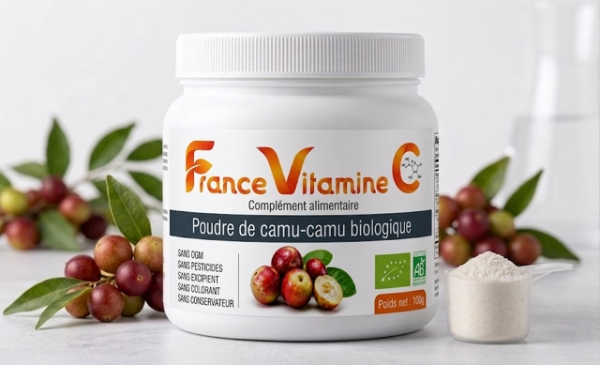
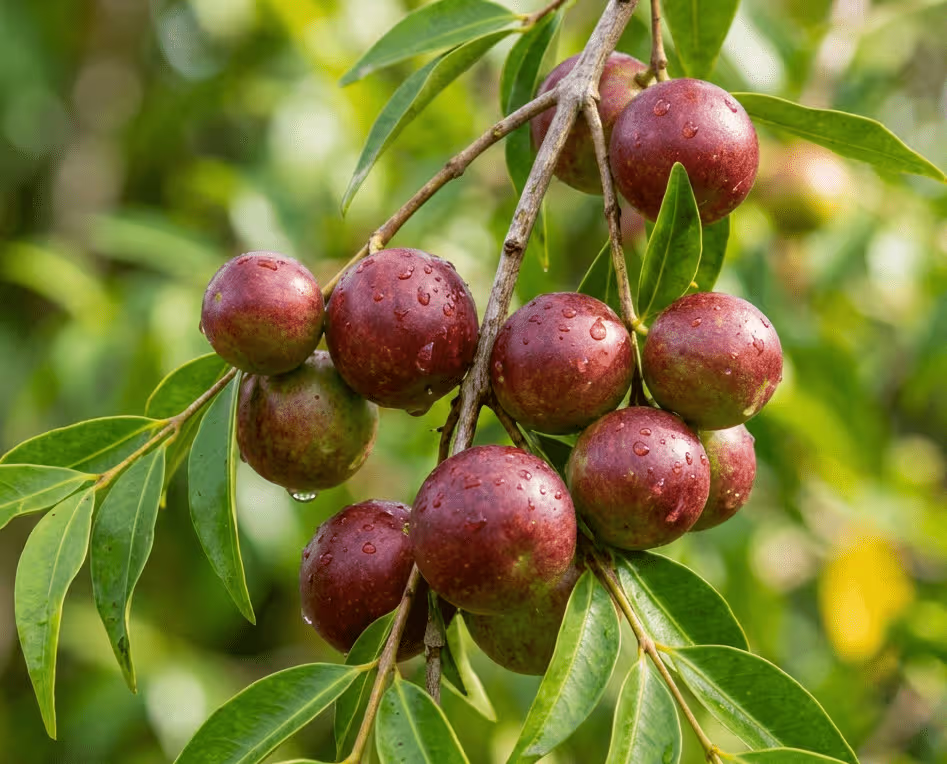
Our Organic Camu-Camu (Myrciaria dubia) is a fruit from the Peruvian Amazon, one of the richest known natural sources of vitamin C.

Organically grown, it is naturally very rich in vitamin C and contains the fruit's natural compounds (polyphenols, flavonoids).

  • 🌿 Sustainably harvested in the Peruvian Amazon
  • 🧬 Rich in polyphenols and flavonoids
  • 🌱 Certified Organic
  • 💚 100% natural, no additives

Benefits

Vitamin C:

  • contributes to the normal function of the immune system;
  • contributes to the reduction of tiredness and fatigue;
  • contributes to normal psychological function;
  • contributes to the protection of cells from oxidative stress.

Directions for use

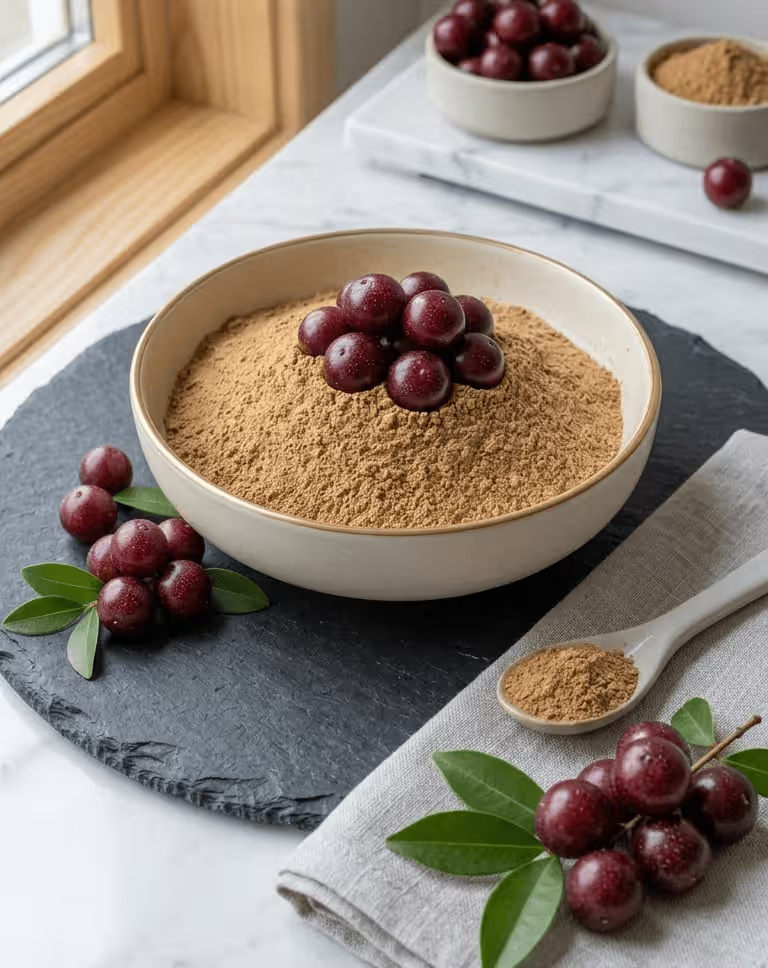
Take 1 to 3g per day (1/2 teaspoon), dissolved in a glass of water, juice or a smoothie. Pronounced tangy flavour — we recommend mixing it in fruit juice.

Ingredients

100% Organic Camu-Camu fruit powder (Myrciaria dubia).

NutrientPer 100g
Natural vitamin C12,000 – 20,000 mg
PolyphenolsNaturally present

Origin: Peruvian Amazon — Certified Organic AB / EU Organic

What you buy. Nothing more.

📋
Certificate of analysis available

Every batch is tested. Results provided on request.

🧪
Single-ingredient formula

100% organic camu-camu fruit powder. No fillers, no additives.

🇪🇺
European traceability

Identified manufacturer. Documented supply chain.

⚖️
EU regulation compliant

DGCCRF registered. Labelling compliant with EU Regulation 1169/2011.

Among fresh fruit, it comes top: 2,000 to 3,000 mg of vitamin C per 100 g of fresh pulp, against around 300 mg for sea buckthorn and 50 mg for the orange. The comparison reverses for powders: acerola powders are most often standardised to a high content, whereas camu-camu is dried whole, at around 6,000 mg per 100 g. So it is the fresh fruit, not the powder, that earns it its record.
It grows only in the Amazon, where harvesting remains small-scale and seasonal, and volumes are low. Per dose, the gap narrows: less of it is needed for the same vitamin C intake.
Add 1 to 3 g, the equivalent of a small spoonful, to a smoothie, a yoghurt, a fruit juice or water. The taste is distinctly tart, easily masked by sweet fruit. Do not heat above 70 °C. One gram of powder provides around 60 mg of vitamin C.
1 to 3 g per day provide 60 to 180 mg of vitamin C depending on the concentration of the batch. Around 2 g cover the reference value of 110 mg per day set by ANSES for adults. EFSA allows for an additional 35 mg per day for smokers. Take the total vitamin C dose into account, from all sources combined.
They are the natural pigments that give the fruit its deep red colour. They belong to the polyphenol family and are the subject of research work on their antioxidant properties. They accompany vitamin C within the fruit matrix, which an isolated vitamin C does not provide.
In case of pregnancy, breastfeeding or anticoagulant treatment, ask your doctor for advice before regular consumption. Start with a small dose and increase gradually: camu-camu is very acidic and is poorly tolerated on an empty stomach.
Yes, it mixes well with acerola, spirulina, chlorella or moringa. Take the total vitamin C dose into account if several of these powders provide it.
Away from light, moisture and heat, in its pouch or jar tightly resealed. Vitamin C oxidises on contact with air: use a dry spoon. Once opened, allow 6 to 12 months depending on storage conditions.

Chargement des avis…